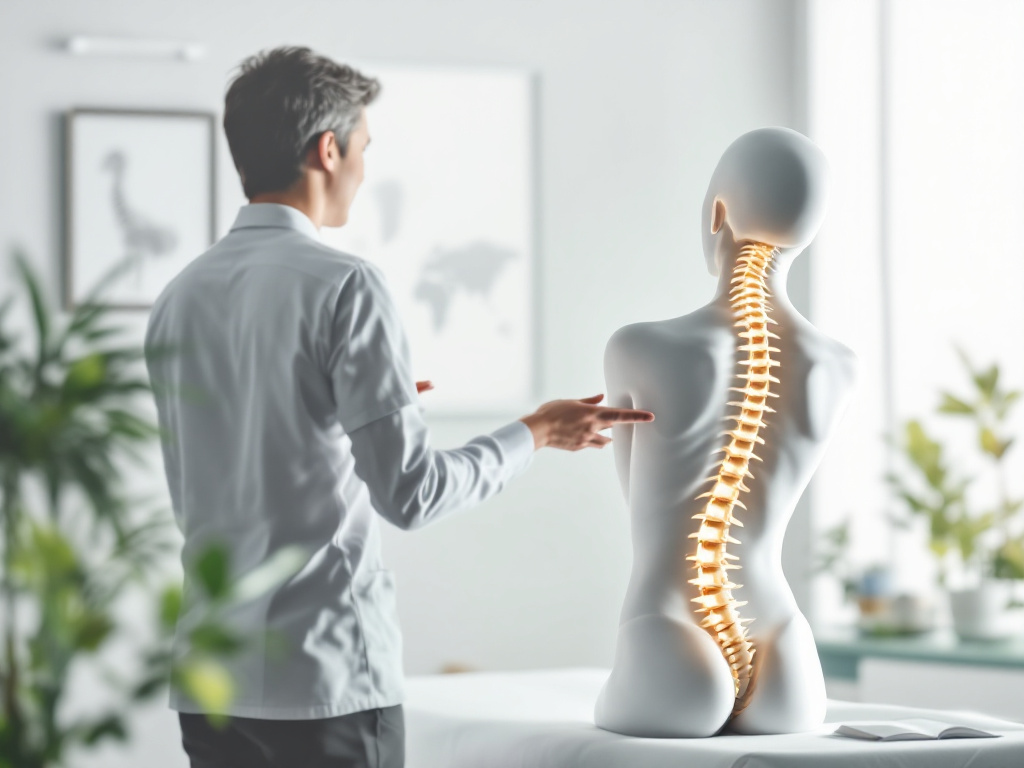
Kyphosis, scoliosis, and other spinal curvature conditions can affect every part of your daily life, from how you breathe and move to how you perform at work, in the gym, or on the field. When you explore chiropractic for spinal curvature conditions, you are really looking at two key questions: what is realistically possible for your spine, and how can you protect your long‑term health and performance.
This guide walks you through what the research shows chiropractic care can and cannot do for curvature disorders, how specialty tracks like neurologic and sports-focused care fit in, and what kind of results you can reasonably expect.
Understanding spinal curvature conditions
Spinal curvature conditions are not all the same, and your treatment choices should reflect that. The two most common are kyphosis and scoliosis, and they affect your body in different ways.
Kyphosis is an excessive outward curve of the upper back, beyond the normal 20 to 45 degrees, which leads to a rounded or hunched posture [1]. Poor posture in childhood and adolescence, such as slouching or carrying heavy backpacks, can gradually pull your thoracic vertebrae out of alignment and weaken the supporting muscles and ligaments [1].
Scoliosis is a side-to-side, often rotational curve of the spine of more than 10 degrees. About 3 percent of the U.S. population has some form of scoliosis, and roughly 90 percent of those curves are not severe enough for surgery but can still cause significant pain and functional issues [2]. Scoliosis is progressive and incurable, so the goal is long-term management, not a permanent cure [3].
When either condition progresses, you may notice more than a cosmetic change. Kyphosis can weaken your back muscles and make walking, sitting, looking up, driving, and even breathing more difficult if the curve compresses your lungs and airways [1]. Scoliosis can alter your body alignment enough to affect lung capacity, core strength, and even balance in sport or daily activity [2].
That is where specialized, niche chiropractic programs focused on performance, posture, and neuromusculoskeletal health, such as bowker performance chiropractic and other niche chiropractic charlotte services, can help you manage symptoms and protect your long‑term function.
How chiropractors evaluate spinal curvature
If you seek chiropractic for spinal curvature conditions, your first visit should feel more like a comprehensive evaluation than a quick adjustment. You want a team that looks beyond pain and carefully measures how your spine moves and how your nervous system responds.
For kyphosis, chiropractors typically start with your history, a thorough physical examination, and imaging such as X‑rays or MRI to quantify the curve. They will also use motion and static palpation, which means gently feeling how each segment of your spine moves and where muscles are tight or tender [4].
For scoliosis, a similar approach is used. Doctors of chiropractic perform detailed postural exams, orthopedic tests, and often early screening in children or teens, which can be critical since some scoliosis curves worsen if they are not managed early [2].
In a performance or neurology-focused practice, your assessment may also include:
- Balance and coordination testing to see how curvature is affecting your motor control, which ties directly into services like chiropractic for balance and coordination
- Gait and movement analysis, which helps connect your spinal curve to lower body issues, and may overlap with sports injury chiropractic charlotte
- Neurologic screening, reflexes, eye movements, and sensory testing as part of neurologic chiropractic care or broader chiropractic neurologic support
This level of detail creates a map for your treatment, from specific spinal segments that need motion restored to muscle groups that need retraining and postural strategies you can apply in real life.
What chiropractic can realistically change
It is important to separate two goals: changing what your X‑ray looks like and changing how you feel and function.
For kyphosis, chiropractic care can be a non‑surgical option to ease pain, stiffness, and other symptoms associated with the abnormal upper‑back curve [4]. Regular adjustments aim to open joint spaces, restore more normal motion and alignment, and improve communication between your nervous system and the muscles and ligaments that support your spine [1]. Over time, that can help you retrain into healthier posture and reduce stress on your mid‑back.
For scoliosis, the research is more nuanced. General chiropractic manipulation on its own does not typically reverse the spinal curve, and most evidence suggests you should not expect a large, permanent reduction in Cobb angle from standard adjustments alone [5]. However, there are several important potential benefits:
- Short‑term pain relief and reduced muscle spasm are consistently reported in scoliosis patients receiving chiropractic care [6]
- Improved spinal motion and vertical alignment can occur, even without a major change in the curvature itself [7]
- When chiropractic rehabilitation is combined with specific exercises and home programs, some adults may see a meaningful Cobb angle reduction. One multimodal program reported an average 10 degree decrease that was sustained over 24 months, along with large improvements in pain, disability, and lung function [8]
In other words, if your goal is to feel and perform better, especially when combined with targeted exercise or physiotherapy, chiropractic can be a valuable part of your plan. If your only goal is to straighten your spine on imaging, you need to be cautious and realistic about what is possible.
Techniques used for spinal curvature care
Once your chiropractor has a clear picture of your spine, they may draw from several techniques. For kyphosis, spinal manipulation and gentle mobilization of the thoracic spine are often central. Specific spinal manipulation, flexion‑distraction, and instrument‑assisted techniques can all be used to improve joint motion and reduce inflammation around a curved segment [4].
A typical chiropractic adjustment involves applying a controlled force to a spinal joint, taking it slightly beyond its usual active range of motion. You may hear a popping or cracking sound as gas is released from the joint space, and the goal is to restore normal motion and improve how your body moves overall [9]. Research suggests these adjustments can ease certain types of low back pain and some spine‑related conditions like neck pain and headaches [9], which often accompany postural and curvature issues.
For scoliosis, chiropractors may again use spinal manipulation to improve alignment and mobility. However, the emphasis should be on symptom relief and functional gains rather than promising to fully correct the curve [10]. Evidence and expert opinion point toward a more comprehensive approach, where chiropractic is paired with scoliosis-specific exercises and other methods that target three‑dimensional self‑correction, such as the Schroth method [11].
In a performance and posture‑oriented clinic, your plan may also integrate:
- Targeted joint work for regions overloaded by your curve, similar to chiropractic for joint dysfunction or chiropractic for joint mobility
- Posture‑specific protocols like postural therapy chiropractic care, especially if kyphosis and scoliosis have led to forward head posture or altered pelvic mechanics
- Sport‑specific loading progressions if you are working with a chiropractor for athletic performance to protect your spine under higher demands
The combination of hands‑on care and highly tailored movement work is where you will usually see the most meaningful improvements.
You cannot always change the architecture of your spine, but you can almost always improve how that spine is loaded, controlled, and used in real life.
Adjunct therapies that support spinal health
Chiropractic for spinal curvature conditions often includes more than manipulation. Many chiropractors use adjunct therapies to address muscle imbalances, inflammation, and movement patterns that sustain your curve.
For kyphosis, these may include:
- Interferential electrical stimulation to help reduce inflammation and pain
- Therapeutic ultrasound to ease muscle spasms and stiffness
- Trigger point therapy and soft tissue techniques, such as Graston instrument‑assisted work, to release chronically tight muscle bands
- Manual joint stretching and resistance techniques to expand your available movement
- Prescribed exercises to restore more normal thoracic motion and strengthen key postural muscles [4]
Scoliosis care can include similar modalities, but the evidence points strongly toward pairing chiropractic with physiotherapeutic scoliosis‑specific exercises. These programs focus on three‑dimensional self‑correction, postural stabilization, and integrating your corrected posture into everyday activities, often performed multiple days per week [10]. When combined with chiropractic manipulation, exercise‑based rehabilitation appears to offer better curvature and symptom outcomes than chiropractic alone [3].
If your curvature is affecting related issues such as sciatica or neck pain, you might also benefit from focused programs like chiropractic for chronic sciatica, chiropractic for sciatica and posture, or chiropractic for whiplash and posture. These tracks target the downstream effects of your spinal alignment on nerves and soft tissues.
Health benefits you may notice
While outcomes vary, there are several areas where chiropractic for spinal curvature conditions can support your overall health and performance when it is appropriately tailored.
Pain and inflammation control
One of the clearest short‑term benefits is pain relief. For both kyphosis and scoliosis, reducing local inflammation, easing muscle spasm, and improving joint mobility can decrease daily discomfort and help you move more freely [12]. In the 6‑month multimodal scoliosis rehabilitation study, adults experienced a 39 percent improvement in pain scores, which improved by another 21 percent at 24 months [8].
Less pain makes it easier for you to participate in strengthening, conditioning, and sport, which is critical if you work with bowker performance & posture chiropractic or similar programs to enhance your athletic capacity.
Functional performance and daily activities
Improved function is often just as important to you as reduced pain. In the same scoliosis rehabilitation data, disability ratings dropped from 60 percent baseline disability to 30 percent at 6 months and 18 percent at 24 months [8]. That translates into better tolerance for standing, walking, lifting, and sport.
For kyphosis, restoring thoracic mobility can also make looking up, driving, and breathing more efficient [1]. In some adults with scoliosis, lung function improved by 7 percent and remained improved at 24 months after chiropractic rehabilitation, particularly in those with thoracic or thoracolumbar curves [8].
If migraines, balance issues, or neurologic symptoms are part of your picture, targeted options such as chiropractic for migraine charlotte and advanced bowker neuromusculoskeletal care can be integrated into the same plan.
Long‑term spinal health
Although you may not fully reverse a curvature, you can still slow degenerative changes and maintain spinal health. In kyphosis care, key goals include reducing inflammation, decreasing spasms, maintaining spinal motion, strengthening support muscles, reducing chronic pain, slowing mid‑back degeneration, and optimizing disc health [4].
For scoliosis, early detection and tailored treatment are central to preventing progression. Scoliosis‑specific exercise is particularly important, with chiropractic often serving as a complementary strategy to improve mobility and function, not as a stand‑alone cure [10].
If performance is a priority for you, keeping your spine moving well and minimizing pain becomes the foundation for any higher‑level training you do with an athletic performance chiropractor or in a specialty track like bowker specialty chiropractic services.
Risks, safety, and informed decisions
Chiropractic adjustments are generally considered safe when delivered by a trained, licensed professional, but no treatment is risk‑free. Minor side effects such as headache, localized soreness, or fatigue can occur for a few days after an adjustment [9]. Some individuals do not experience improvement after several weeks, in which case you and your provider should reassess your plan and consider alternatives [9].
More serious complications, while rare, have been reported, particularly with forceful manipulation of the upper spine. A systematic review found that spinal manipulation is commonly associated with mild to moderate adverse effects and has, in some cases, led to severe events such as vertebral artery dissection, stroke, dural tears, disc herniation, nerve injury, hematoma, and fractures [13]. Some case‑control research has suggested a higher risk of vertebrobasilar stroke within a week of an upper spinal manipulation in younger adults [13].
Given that the effectiveness of spinal manipulation for many conditions is still uncertain, the authors of that review recommend cautious use, especially for upper spine adjustments, and stress the importance of thorough informed consent [13].
For you, that means:
- Asking your provider to explain the expected benefits and the known risks in clear language
- Discussing whether gentler techniques or lower‑risk regions of the spine can be prioritized
- Ensuring that your plan integrates exercise, education, and, when appropriate, collaboration with physiotherapists or medical specialists
Centers that specialize in posture, neurology, and performance, such as those focused on postural therapy specialist charlotte care or chiropractic for scoliosis charlotte, are often well equipped to have these nuanced conversations.
Choosing the right specialty chiropractic track
If you are considering chiropractic for spinal curvature conditions, you do not have to choose a generic path. You can seek out niche services that match your goals:
- If your primary concern is posture and daily function, a clinic emphasizing postural therapy chiropractic care and scoliosis or kyphosis management is a good fit
- If you are an athlete or very active, working with bowker performance chiropractic or a chiropractor for athletic performance can help you integrate spinal care into training, competition, and recovery
- If neurologic symptoms, balance issues, or migraines are part of your picture, specialized neurologic chiropractic care and chiropractic neurologic support can bring an additional layer of assessment and treatment
- If your curvature is contributing to radicular pain, neck issues, or complex posture problems, targeted services like chiropractic for whiplash and posture or chiropractic for sciatica and posture can be integrated
Working with a provider or team that understands advanced neuromusculoskeletal care, such as bowker neuromusculoskeletal care, gives you a more precise, evidence‑aware framework. You are not just chasing symptoms. You are building a long‑term strategy that respects the realities of your spinal curvature while maximizing your capacity to move, perform, and live well.
References
- (Revival Chiropractic)
- (Cleveland University-Kansas City)
- (Iron Health)
- (HealthCentral)
- (Healthline, Iron Health)
- (Healthline, Cleveland University-Kansas City)
- (Healthline)
- (NCBI – Journal of Chiropractic Medicine)
- (Mayo Clinic)
- (Synapse Physiotherapy)
- (Iron Health, Synapse Physiotherapy)
- (HealthCentral, Healthline)
- (Journal of the Royal Society of Medicine)