Why understanding lower back pain matters
When you live with recurring discomfort it is natural to ask why it keeps happening. Understanding the common causes of lower back pain gives you a clearer picture of what might be going on in your body and what you can realistically do about it.
Lower back pain is one of the most frequent reasons people see a doctor or miss work and it is a leading cause of disability worldwide [1]. Up to 23% of adults worldwide struggle with chronic lower back pain that can affect how you walk, sleep, work, and manage daily tasks [2]. Even if your pain is not constant, recurring flare ups can wear you down over time.
As you explore the common causes of lower back pain, it helps to remember that more than one factor is often involved. Lifestyle habits, injuries, and structural changes in your spine can add up. Recognizing these patterns can also make it easier to understand why back pain keeps coming back for you personally.
How your lower back works
Your lower back, or lumbar spine, carries a large share of your body weight while still allowing you to bend, twist, and move. Five lumbar vertebrae stack on top of one another, separated by discs that act as cushions. Muscles, tendons, and ligaments surround these bones and help stabilize every movement you make.
When everything is working well, these structures share the load smoothly. When something is strained, irritated, or damaged, you are more likely to feel pain, stiffness, or muscle spasms. Because the lumbar region is involved in almost every daily activity, even a minor problem can feel intense and disruptive.
Lower back pain can come from mechanical issues in the spine, structural changes, inflammation, or other medical conditions [3]. Often, several of these overlap. This is one reason back pain can be difficult to diagnose through imaging alone and why a careful history and physical exam are so important.
Lifestyle habits that strain your back
Your daily habits have a direct effect on your spine. Some of the most common causes of lower back pain start with how you sit, move, and care for your body over months and years, not just what happens in a single day.
Poor posture and alignment
Poor posture is a leading contributor to back pain. When you slouch, hunch over devices, or sit in a twisted position, you place uneven stress on your spine. Over time, this can lead to anatomical changes in your back, including constriction of nerves and blood vessels. These changes can cause pain, muscle problems, and issues in the discs and joints of your spine [4].
Slouching or hunching makes some muscles work harder while others weaken. This uneven strain leads to fatigue, tightness, and eventually lower back pain [5]. If you spend many hours a day at a desk, you might notice pain that builds slowly, shifts from one part of your back to another, or worsens at certain times of day [4].
If posture is a recurring issue for you, you may find it useful to read more about poor posture back pain causes and how they relate to other spine symptoms.
Prolonged sitting and sedentary lifestyle
Long hours of sitting, especially without breaks, weaken the core muscles that support your spine. As these muscles tire, your shoulders round forward and your lower back tends to collapse into a slouch. This posture can contribute to lower back pain as well as neck and shoulder discomfort [5].
A sedentary lifestyle also leads to tightness in the chest and hamstrings. These tight muscles pull your body out of alignment and make it harder for your spine to move freely. This restricted movement further increases the stress on your lower back and promotes ongoing pain [5].
Interestingly, choosing active transportation, such as walking or cycling to work, has been linked to a reduced risk of low back pain that lasts more than 30 days, especially if you do not already have abdominal obesity and are not exposed to heavy physical workload factors [6]. Small lifestyle changes can make a meaningful difference over time.
Poor ergonomics and device use
Poor ergonomics, such as an uncomfortable chair, a low or high computer screen, or working from a soft couch, encourage unnatural body positions. These positions strain your muscles and place extra pressure on your spine, which can lead to lower back pain [5].
Looking down at phones or laptops for long periods also affects your neck and upper back. If you notice both back and neck symptoms, it can help to explore related issues like why does my neck hurt all the time, neck stiffness causes explained, and what causes upper back pain, since these often overlap with low back strain.
Lifting, carrying, and daily physical demands
Incorrect posture when lifting objects is another common source of lower back pain. Even if what you lift is not heavy, bending at the waist, twisting suddenly, or reaching and lifting at the same time can cause strain. Over time, these habits can lead to long term back damage and pain, which is why proper lifting technique is so important [4].
Strenuous physical work adds to this risk. Jobs that involve heavy lifting, repeated bending, or the use of vibrating tools have been associated with higher rates of low back pain and lumbar radicular pain, which is pain that travels down your leg [6].
You may not be able to change your job, but you can often adjust how you move, how often you take breaks, and how you organize your tasks to reduce the load on your back.
Muscle and ligament injuries
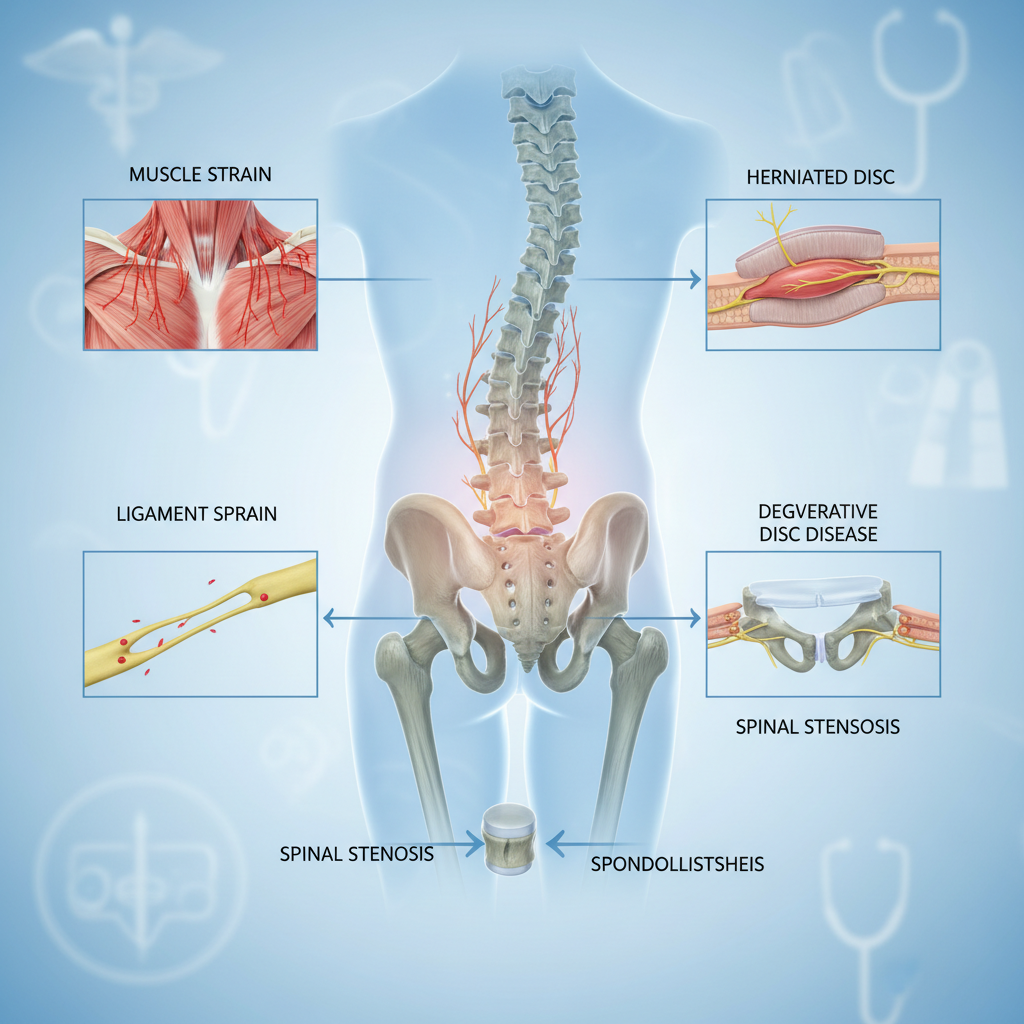
In many adults, the most common causes of lower back pain are strains and sprains in the muscles and ligaments that support the lumbar spine. These injuries can happen suddenly or develop over time.
Strains, sprains, and lumbar strain
A back strain is an injury to a muscle or tendon that supports your spine. A sprain involves the stretching or tearing of ligaments, the tissues that connect bones to each other. Both are extremely common because the lumbar region bears much of your body weight during walking, running, and lifting [7].
Common causes of lower back strains include twisting or pulling muscles or tendons, a single incident of improper lifting, overstressing the back muscles, or chronic overuse from repetitive movements [7]. Lower back sprains often follow falls, sudden twists, or blows that push a joint out of its usual position and stretch ligaments beyond their normal range [7].
Lumbar strain, a frequent diagnosis, describes injury to the low back muscles and tendons. It often results from sports that involve pushing and pulling, such as weightlifting and football, or from activities that require sudden twisting, including tennis, basketball, baseball, and golf [8].
Symptoms can include sudden onset of pain, muscle spasms that intensify discomfort, and tenderness when you touch the affected area [8].
Many back strains and sprains improve with appropriate rest, gradual return to movement, and exercises that strengthen and stretch the back and abdominal muscles [8].
If you are unsure whether your pain is mainly muscular or related to the spine itself, you might find it helpful to learn more about muscle tension vs spinal pain.
Overuse and repetitive motion
You do not have to be an athlete to develop an overuse injury in your lower back. Everyday activities like gardening, housework, or caring for young children can involve frequent bending, lifting, and twisting. Over time, this repeated stress can lead to microtears in muscles and ligaments, which then become painful.
Chronic overuse is one reason why back strains and sprains are among the most common medical complaints after headaches [7]. Building strength gradually and allowing your body time to recover between intense activities can help reduce this risk.
Structural and disc-related problems
Sometimes the common causes of lower back pain involve changes in the structure of your spine itself, particularly the discs that sit between your vertebrae.
Disc compression and herniated discs
Your spinal discs act as shock absorbers. When you sit or stand with poor posture, these discs experience uneven pressure. Over time, chronic poor posture can compress the discs, which may contribute to herniated discs or pinched nerves. This can lead to pain that radiates down your legs, often referred to as sciatica [5].
Herniated discs and pinched nerves are among the more serious causes of back pain, and they typically require medical assessment. You might notice sharp, shooting pain, numbness, or tingling that travels from your lower back into your buttock or leg.
According to the Mayo Clinic, more severe injuries like spinal fractures or ruptured discs are recognized causes of lower back pain, along with arthritis and certain infections [3]. These problems are less common than strains and sprains, but they are important to consider, especially if your symptoms are intense or persistent.
Age-related changes and arthritis
As you age, the structures in your spine go through normal wear and tear. The discs can dry out and lose height, joints can develop arthritis, and small bony growths can form. These degenerative changes do not always cause pain, but in some people they lead to chronic lower back discomfort or stiffness.
Degenerative conditions such as arthritis and osteoporosis are significant causes of chronic lower back pain that can worsen over time without appropriate treatment [2]. While age and genetics play a role, your lifestyle, posture, and physical activity level can influence how these changes affect you day to day.
If your pain persists for months or seems to be gradually worsening with age, you may want to explore resources on what causes chronic back pain in more depth.
Other medical and inflammatory causes
Not all back pain comes from posture or overuse. Sometimes, inflammation or other medical conditions are involved.
According to the Mayo Clinic, back pain can be related to inflammatory conditions or infections that affect the spine, among other medical issues [3]. These conditions are less frequent but are important to rule out, especially if you experience:
- Unexplained weight loss
- Fever or chills
- Back pain at night that does not improve with rest
- Pain following a significant fall or accident
Because some of these conditions may not show up clearly on early imaging studies, your medical history, physical exam, and symptom pattern guide your provider in deciding which tests you need [1].
Weight, work, and lifestyle risk factors
Certain risk factors make you more likely to experience persistent or severe low back pain. Some of these you can modify, which means you have real opportunities to improve how you feel over time.
Abdominal obesity and general weight
Carrying extra weight, particularly around your midsection, places additional load on your lumbar spine and can change your posture. Being overweight increases the risk of muscle strains and ligament sprains in your lower back [3].
A large Finnish study found that abdominal obesity, measured by waist circumference, significantly increased the risk of low back pain lasting more than 7 days and more than 30 days [6]. General obesity, measured by body mass index, was also linked to a higher risk of lumbar radicular pain that lasted more than a week and more than 30 days [6].
While weight is only one piece of your overall health, even modest, sustainable changes in activity and nutrition can ease pressure on your spine over time.
Smoking, physical workload, and vibration
Smoking has been associated with an increased risk of both low back pain and lumbar radicular pain. Strenuous physical work can add to this risk, particularly when it involves heavy lifting or awkward body positions [6].
Using vibrating tools at work, such as jackhammers, certain power tools, or heavy equipment, has been shown to raise the risk of lumbar radicular pain as well [6]. If your job includes these exposures, protecting your back with proper technique, breaks, and safety equipment becomes even more important.
If you want a broader view of how your choices affect your spine, you might find it helpful to explore how lifestyle affects back pain and how small adjustments can reduce your day to day discomfort.
Why your pain keeps coming back
If you feel like you solve your back pain for a while only to have it return, you are not alone. Back pain often develops without a single clear cause that shows up on a scan or test [1]. Often, recurring pain is the result of underlying patterns that have not fully changed.
Common reasons pain keeps returning include:
- Ongoing poor posture or ergonomics at work
- Persistent muscle weakness or tightness
- Returning quickly to heavy lifting or intense activity after injury
- Untreated lifestyle factors such as smoking or very low activity levels
- Underlying degenerative changes that are not being managed with an appropriate plan
In many cases, short term rest helps you feel better, but once you resume your usual routines without strengthening or posture changes, the same structures become irritated again. Looking at both your pain episodes and your everyday habits can reveal patterns that a more comprehensive approach can address.
For additional insight into recurring symptoms, you can read more about why back pain keeps coming back and how it connects with other spinal issues such as why neck pain gets worse over time.
When to seek medical evaluation
Although many causes of lower back pain are mechanical and improve with self care, certain signs mean you should contact a healthcare professional promptly. These include:
- Pain that is severe, constant, or getting worse instead of better
- Pain after a significant fall, accident, or trauma
- Weakness, numbness, or tingling in one or both legs
- Loss of bladder or bowel control, or new difficulty going
- Unexplained weight loss, fever, or feeling generally unwell
- Pain that persists longer than a few weeks despite rest and simple measures
Lower back pain can affect anyone, including children and teens, so age alone does not protect you from more serious issues [1]. If you are unsure whether your symptoms need a medical visit, it is reasonable to reach out to a provider for guidance.
Next steps for managing your lower back pain
Understanding the common causes of lower back pain is an important first step. It helps you see your pain not as a random event but as the result of specific factors that you can often influence.
From here, you might consider:
- Paying closer attention to how you sit, stand, and move during the day
- Adjusting your work setup to support healthier posture
- Building gentle strength and flexibility in your core and hips
- Reducing risk factors such as smoking or prolonged sitting where possible
- Seeking a professional evaluation if your pain is severe, persistent, or unexplained
You do not need to solve everything at once. Even small, consistent changes in posture, movement, and lifestyle can gradually reduce strain on your spine and give your lower back a better chance to heal.