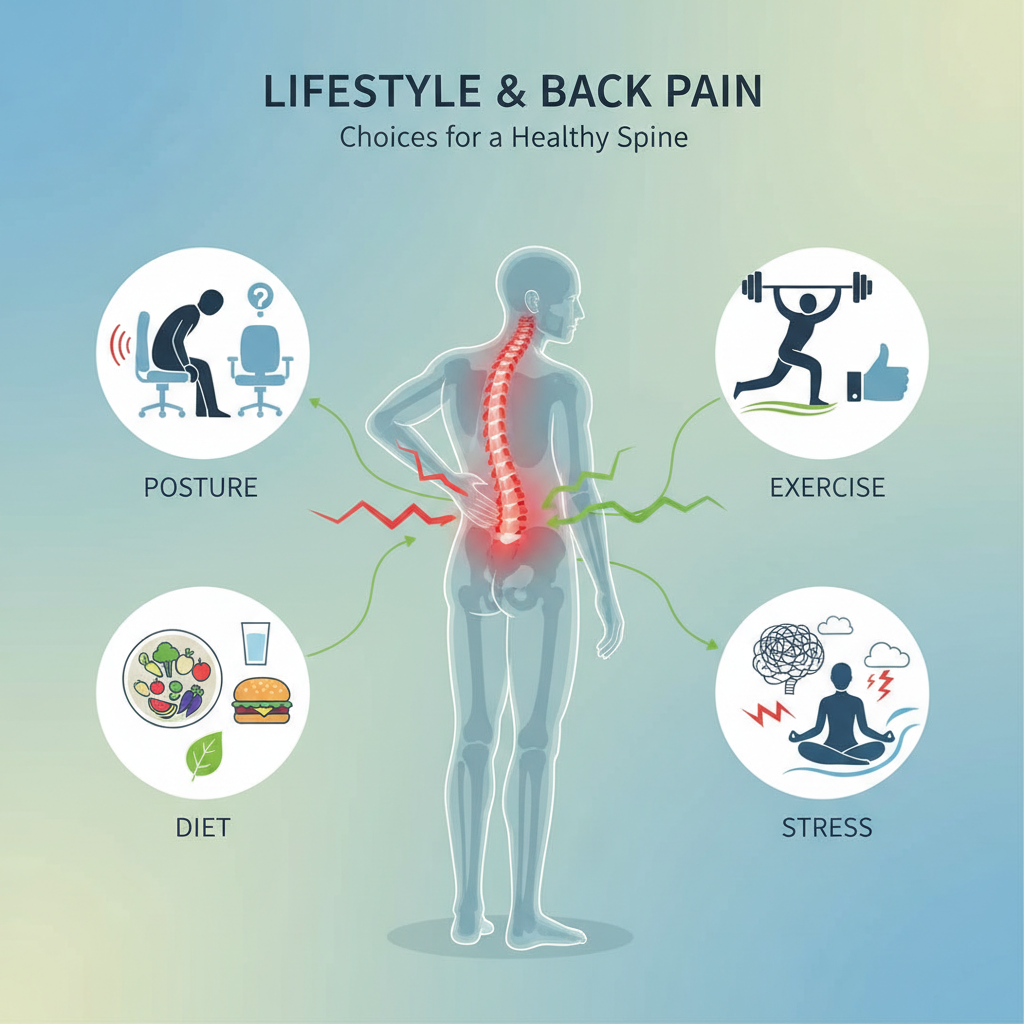
Why lifestyle has so much power over your back
If you live with recurring back pain, it often feels mysterious or random. In reality, how lifestyle affects back pain is more powerful than most people realize. The way you sit, move, eat, sleep, and manage stress can quietly overload your spine day after day until pain becomes your new normal.
Back pain is rarely caused by a single bad chair or one heavy box. It is usually the result of many small lifestyle habits that strain the same tissues over and over. When you understand those patterns, you can finally see why your pain keeps coming back, and what you can change to get lasting relief.
If you want to go deeper into specific pain types, you can also explore related topics like common causes of lower back pain, what causes upper back pain, and what causes chronic back pain.
How posture and sitting habits strain your spine
Your posture and sitting time are some of the most important ways lifestyle affects back pain. They influence how much pressure you place on your spine every hour you are awake.
Poor posture overloads joints and muscles
Slouching is more than a cosmetic issue. When you sit or stand with your head forward, shoulders rounded, or lower back collapsed, you shift forces away from strong support structures and into smaller joints and soft tissues.
Poor posture, such as slouching at a desk, bending over your phone, or sinking into the couch, puts extra pressure on your spine and can intensify back, neck, and hip pain by causing muscle strain and misalignment [1]. Over time, this position can irritate spinal discs, tighten chest and neck muscles, and weaken stabilizing muscles in your core and upper back.
If you notice that your shoulders creep up toward your ears, your chin juts forward, or your lower back feels tired by the end of the day, you are likely dealing with posture related strain. To understand this further, you can read more about poor posture back pain causes.
Sedentary sitting multiplies the load on your back
Modern life encourages you to sit almost all day. Work at a computer, commuting in the car, relaxing with TV or a tablet, all of it adds up.
Research discussed by the National Spine Health Foundation notes that sitting can increase the load on back muscles by up to 90 percent compared to standing, which leads to muscle soreness and stiffness that contribute to back pain over time [2]. Long periods of sitting also reduce blood flow to key support muscles like the glutes, which can trigger posture problems such as anterior pelvic tilt and lower back pain.
A systematic review found that a sedentary lifestyle is a significant risk factor for low back pain, with adults who sit more facing a higher risk of pain, particularly when sitting or driving for prolonged periods [3]. The longer you stay seated in one position, the more your muscles fatigue and the more your spine has to compensate.
If you often wonder why back pain keeps coming back, a long sitting routine plus poor posture is one of the most common underlying patterns.
How weight and diet affect back pain
Your spine is a weight bearing structure. What you weigh, and what you eat that contributes to that weight, has a direct impact on how your back feels.
Extra weight increases mechanical stress and inflammation
Carrying extra weight, especially around your abdomen, acts like a constant load pulling your pelvis forward and increasing the arch in your lower back. This can compress discs, strain ligaments, and fatigue muscles that are trying to keep you upright.
Gaining excess weight, particularly around the abdomen, increases stress on the spine and heightens the risk of disc problems, joint pain, inflammation, and osteoarthritis. Each 11 pound weight gain corresponds to a 36 percent higher risk of developing osteoarthritis affecting the cervical and lumbar spine [1]. A systematic review of genetic data also shows that a higher body mass index has a clear causal effect on back pain outcomes, not just an association, with odds ratios around 1.18 for various back pain conditions [4].
Excess body weight is also linked with changes in the natural curve of your spine and compression of shock absorbing discs, which can contribute to chronic pain [5].
Diet quality shapes inflammation and tissue health
What you eat can either promote inflammation or help calm it down. Since inflammation is a key driver of pain sensitization, your daily menu influences how sensitive your back is to strain.
A large cross sectional study in nearly 7,700 adults found that people who followed a high protein diet, including red and white meat, legumes, nuts, and eggs, had lower odds of chronic low back pain, even after adjusting for smoking, BMI, and physical activity [6]. In contrast, those who often ate an energy dense diet high in salt, sweets, hydrogenated fat, soft drinks, refined grains, tea, and coffee had higher odds of chronic low back pain [6].
A pro inflammatory diet rich in processed foods, refined grains, sugary beverages, and fried foods can increase systemic inflammation and worsen chronic back pain, while anti inflammatory foods, such as fatty cold water fish, dark leafy greens, berries, avocados, olive oil, beans, turmeric, and cinnamon, may help reduce inflammation and potentially alleviate pain [5].
You also need building blocks for healthy bones and discs. A diet low in calcium and vitamin D increases the risk of osteoporosis related vertebral fractures and kyphosis, which can cause back pain. Calcium rich foods include fortified milk, dark leafy greens, and canned fish, and most adults need about 1,000 mg daily, with women over 50 needing about 1,200 mg [5].
Finally, hydration matters. Spinal discs are about 80 percent water. While dehydration does not directly cause disc problems, inadequate hydration can worsen the perception of pain and contribute to stiffness [5].
How sleep habits can increase or relieve pain
Sleep is when your tissues repair, your nervous system resets, and your pain sensitivity recalibrates. If your sleep is poor, you live in a constant deficit that makes back pain much more likely and more intense.
Mattress and sleep position shape spinal alignment
Sleeping on a mattress that is too soft or too firm misaligns your spine, which can result in morning discomfort and stiffness. Choosing a medium firm mattress and sleeping on your back or side with proper pillow support helps maintain neutral spinal alignment and reduce pain [1].
The National Spine Health Foundation explains that poor sleeping habits, such as inadequate mattress support or poor spinal alignment, can worsen existing conditions like herniated discs, spinal stenosis, or muscle strains over time [7]. Simple adjustments, like placing a pillow behind your knees when you lie on your back or between your knees when you sleep on your side, can significantly reduce pressure on your spine and ease back pain [7].
Using a firm or medium firm mattress that distributes pressure more evenly is often better for spinal support than very soft surfaces that let you sink and twist out of alignment [7].
Sleep quality directly affects back pain risk
Sleep is not just about comfort. It has a measurable impact on your risk of developing chronic back pain and disability.
A large Norwegian study that followed more than 8,600 adults over about 22 years found that people with long term poor sleep quality had nearly twice the risk of back related disability compared to those with long term good sleep quality, with a risk ratio of 1.92 [8]. The same study found that long term poor sleep quality was associated with a 65 to 92 percent greater risk of chronic back pain and disability.
Genetic analyses also show that insomnia has a causal relationship with back pain, with an odds ratio of approximately 1.38. This suggests that poor sleep does not just coexist with pain, it actively increases your likelihood of experiencing it [4].
On the positive side, people who had poor sleep but met physical activity guidelines had a 35 percent lower risk of back related disability than those with similar poor sleep who were inactive. This means that while sleep and activity act independently, staying active can buffer some of the damage from poor sleep [8].
Getting 7 to 9 hours of sleep most nights supports tissue repair, muscle relaxation, and reduced pain sensitivity. Chronic sleep deprivation, in contrast, can increase the risk of chronic and disabling back pain [7].
If pain itself is what keeps you awake, small adjustments can help, such as testing different sleep positions, using heat or cold therapy before bed, or adding gentle stretching or yoga in the evening to ease muscle tension [7].
Key idea: Poor sleep and back pain feed each other, but improving either one helps you break the cycle.
How stress, mood, and tension fuel pain
Back pain is not “all in your head,” but your nervous system and emotional state do influence how much pain you feel and how long it lasts.
Stress tightens muscles and heightens sensitivity
Chronic stress and anxiety trigger the body’s fight or flight response. Muscles, especially in your neck, shoulders, and back, tighten as if preparing for danger. When this state continues for weeks or months, tight muscles become painful muscles.
Ongoing stress causes muscle tension in the neck and back, which can worsen pain. Stress management practices like deep breathing, meditation, yoga, and regular exercise can reduce muscle tension and help alleviate back pain [1].
If you feel a constant band of tension across your shoulders, a stiff neck, or a dull ache between your shoulder blades, stress and muscle tightness may be major contributors. To help distinguish what you are feeling, it can be useful to understand the difference between muscle tension vs spinal pain.
Stress also changes how your brain processes pain signals. When you are anxious or overwhelmed, your pain threshold often drops, so ordinary strain can feel much more intense.
Mood, chronic pain, and behavior patterns
When back pain persists, it often affects your mood and activity level. You might move less because you are afraid of making the pain worse, which can weaken muscles and actually increase pain over time. This cycle is one reason why understanding what causes chronic back pain is so important.
Emotional health and physical health work together. Addressing stress, anxiety, or depression with counseling, relaxation practices, or medical support does not just help your mind. It often reduces the intensity and frequency of physical pain as well.
How inactivity and exercise shape your pain risk
Activity is a double edged sword. Too little movement creates stiffness and weakness, while the right kind of movement protects your spine.
Sedentary lifestyle as a pain risk factor
A lifestyle that involves long hours of sitting with little intentional movement is strongly linked to back problems. Research shows that adults with sedentary habits have a moderate but significant increase in low back pain risk, and prolonged sitting and driving time are especially problematic [3].
In children and adolescents, behaviors such as prolonged TV watching and extended computer or mobile use are also associated with higher risk of low back pain, which suggests that these patterns begin early [3].
A meta analysis of Mendelian randomization studies found that leisure sedentary behaviors have a causal effect on back pain with an odds ratio around 1.52, while no clear causal effect was seen for overall physical activity, highlighting that long sedentary stretches are harmful on their own, regardless of occasional exercise [4].
The right exercises protect, and the wrong ones can irritate
Targeted strengthening and stretching can be one of the most powerful tools you have to prevent and manage back pain. Harvard Health notes that exercises that strengthen the back, abdominal, buttock, and upper leg muscles help prevent episodes of lower back pain by making muscles stronger and more flexible [9].
Gentle, gradual activities like tai chi, yoga, Pilates, and core stabilization exercises can significantly reduce chronic low back pain symptoms when performed carefully [9]. Even during a pain flare, regularly getting up and walking as much as you comfortably can helps maintain mobility and prevent further stiffness.
However, not all exercises are appropriate for every condition. If you have severe or radiating pain, such as sciatica, certain movements may actually worsen your symptoms. That is why it is essential to consult a healthcare provider before starting or changing an exercise program, especially if your pain is persistent or unexplained [9].
How smoking, alcohol, and other habits impact your back
Some lifestyle choices affect your back more indirectly, through circulation, bone health, or nervous system changes.
Smoking and blood flow to spinal tissues
Smoking is widely known to harm your lungs and heart, but it also affects your spine. Nicotine reduces blood flow to spinal discs and tissues, which can interfere with healing and increase degeneration.
A meta analysis using genetic data found that smoking has a positive causal effect on back pain, with an odds ratio around 1.30. This suggests that smoking directly contributes to the biological development of back pain through mechanisms that include reduced blood flow and inflammation [4]. Another review of observational studies reported a similar pattern, showing smoking as a modest but significant lifestyle risk factor for low back pain [3].
Alcohol and bone or muscle health
Alcohol may seem unrelated to your back, but frequent or heavy drinking can affect bone density, hormone balance, and muscle recovery. Mendelian randomization research indicates that alcohol consumption is causally associated with back pain, with an odds ratio of approximately 1.31 [4]. One possible pathway is through effects on bone density and muscle fatigue.
Reducing or moderating alcohol intake is therefore not only beneficial for liver and brain health, it may also lower your risk of persistent back issues.
Connecting lifestyle with other pain areas
Back pain rarely exists in isolation. Many of the same lifestyle factors that affect your back also contribute to neck and upper back issues.
If you often ask yourself why does my neck hurt all the time or you notice that neck pain gets worse over time, posture, screen habits, sleep position, and stress are usually part of the answer. Similarly, if you experience frequent stiffness you might benefit from understanding neck stiffness causes explained.
Upper back and shoulder blade pain often arise from the same slouching, sitting, and stress patterns that drive lower back problems. Exploring what causes upper back pain alongside your lower back symptoms can give you a more complete picture of what your body is trying to tell you.
Putting it all together: Small changes, big impact
Back pain is multifactorial. Injury, structural issues, age, and medical conditions do play roles. However, for most adults with recurring pain, how lifestyle affects back pain is the piece you can actually control.
When you look back over your typical week, you might notice a cluster of risk factors:
- Long hours of sitting with poor posture
- Little intentional movement or strengthening
- Extra weight or highly processed, inflammatory foods
- Poor sleep quality or unhelpful sleep positions
- High stress without regular relaxation practices
- Smoking or frequent alcohol use
The good news is that you do not need to change everything at once. Even small, consistent adjustments can reduce strain on your spine and calm irritated tissues. For example, you might:
- Set a timer to stand and walk briefly every 30 to 60 minutes
- Swap one sugary or fried meal for a higher protein, whole food option
- Go to bed 30 minutes earlier and experiment with a pillow between your knees
- Add a short daily stretching or core routine approved by your provider
- Practice a few minutes of deep breathing when you feel your shoulders tense
As you address these root causes, you often see improvements not just in your back, but in your energy, mood, and overall comfort. If your pain is severe, worsening, or not improving with basic lifestyle changes, it is important to work with a medical professional. They can rule out more serious structural problems and guide you toward a plan that combines medical care with sustainable lifestyle shifts.
Understanding the real impact of your daily habits is the first step to getting out of the recurring pain cycle and giving your back a better chance to heal.